From the Sensex pack, HCL Technologies, Infosys, Wipro, Bharti Airtel, Larsen & Toubro, Mahindra & Mahindra, Tata Consultancy Services and Asian Paints were the major gainers. Axis Bank, IndusInd Bank, Bajaj Finance, JSW Steel, State Bank of India and Tata Steel were among the major laggards.
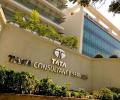
Tata Sons has pocketed Rs 11,164 crore by tendering 24.81 million shares in the Rs 18,000-crore share repurchase programme by the group's flagship firm Tata Consultancy Services (TCS). State-owned insurer Life Insurance Corporation (LIC) tendered 1.17 million shares to take home Rs 528 crore. Small shareholders - those holding shares worth up to Rs 2 lakh - tendered 25.3 million shares in the buyback, 4.22 times the 6 million shares reserved for them in the buyback.

Tata Power on Saturday said it has inked a pact with IIT Delhi to work together on clean energy and other projects that can be transformed from research and development level to pilot stage. Tata Power, one of India's largest private sector integrated utilities, and the Indian Institute of Technology (IIT) Delhi have signed a Memorandum of Understanding (MoU) to collaborate in areas like smart grid technology, clean energy solutions, a company statement said. Considering the large number of experts with their excellence in different fields in IIT Delhi and Tata Power, there is an immense potential to collaborate between academia, research and domain experts from business with a high transformational impact, it added.

Benchmark BSE Sensex rebounded sharply by 941 points while NSE Nifty closed above the 22,600 level on Monday on the back of buying in banking and infra shares and a global stocks rally. The 30-share BSE Sensex jumped 941.12 points or 1.28 per cent to settle at 74,671.28. During the day, it zoomed 990.99 points or 1.34 per cent to 74,721.15.

'Companies are being forced to pay higher salaries to retain and hire employees due to a big rise in attrition in the industry.'

Quarterly earnings from corporates, the US Fed interest rate decision and other global trends will be the major driving factors for determining movement in the domestic equity market in a holiday-shortened week ahead, analysts said. Besides, factors like trading activity of foreign investors, global oil benchmark Brent crude and rupee-dollar trend would also influence trading.

Equity benchmark indices Sensex and Nifty hit their fresh record levels on Thursday after lower inflation numbers raised hopes of an interest rate cut by the RBI. Besides, heavy buying in capital goods, consumer durable and industrial stocks also helped the indices, traders said. Retail inflation continued its downward slide to reach a one-year low of 4.75 per cent in May due to a marginal decline of prices in the food basket and remained within the Reserve Bank's comfort zone of below 6 per cent, according to government data released on Wednesday.
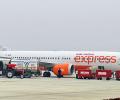
Discontent has been brewing among a section of the cabin crew at the low-cost carrier for some time now, especially after the start of the process of merger of AIX Connect, formerly AirAsia India, with itself.

Infosys co-founder NR Narayana Murthy on Thursday called out "fake news items", which claimed he endorsed automated trading applications and warned the public not to fall for such fraudulent claims. He also slammed "fake interviews" that used "deepfake pictures and videos" of him. In a series of posts on X, Murthy drew the attention of the public to false content being put out by malicious sites and products or services being sold fraudulently using his name and urged people to report any such instances to the concerned regulatory authorities.

'All they need is proper leadership.'

Among Sensex firms, Bajaj Finserv and Bajaj Finance fell by over 4 per cent each. Nestle, Infosys, Tata Consultancy Services, Wipro, UltraTech Cement, HCL Technologies, Larsen & Toubro and Hindustan Unilever were the other major laggards. Bharti Airtel, State Bank of India, Sun Pharma and NTPC were among the gainers.

Singapore government's sovereign wealth fund Temasek is looking to invest $10 billion in India during the next three years, Ravi Lambah, Temasek's head of India and strategic initiatives, said.
Benchmark equity indices Sensex and Nifty rebounded on Wednesday, propelled by bargain hunting in index majors Reliance Industries, ITC and SBI amid a largely firm trend in global equities. In a highly volatile trade, the 30-share BSE Sensex rebounded 89.64 points or 0.12 per cent to settle at 72,101.69. During the day, it jumped 390.62 points or 0.54 per cent to 72,402.67.

The acquisition will give the Tatas a firm footing on international routes and generate economies of scale.

From the Sensex basket, Mahindra & Mahindra, Larsen & Toubro, JSW Steel, NTPC, IndusInd Bank, Sun Pharma, UltraTech Cement, State Bank of India, Reliance Industries, and Maruti were the major gainers. Nestle, Tata Consultancy Services, Axis Bank, ICICI Bank, Bajaj Finance, ITC, and Asian Paints were among the laggards.

The Budget proposals are expected to boost the fortunes of consumer goods and fast-moving consumer goods companies, which have been struggling with poor consumer demand for more than a year. The Budget announcements, such as the increase in standard deduction by Rs 25,000 for income-tax payers and slab revisions, will put more money in their hands, boosting consumer demand. Private consumption is also likely to benefit from a new scheme to offer internships to 10 million youths in the country's top 500 companies.

From the Sensex basket, Kotak Mahindra Bank jumped 5 per cent after the company reported a 25 per cent growth in its March quarter net profit at Rs 5,302 crore, limited by a drop in the core income due to narrow interest margins. Tata Consultancy Services, Hindustan Unilever, Mahindra & Mahindra, Sun Pharma, Tech Mahindra and IndusInd Bank were among the other major gainers. Titan tanked 7 per cent after its March quarter earnings failed to cheer investors.

In a post on the microblogging platform 'X' on Saturday, passenger Vineeth K said that even though he was getting cheaper fares with Gulf carrier Etihad, he had opted for Air India as it operates a non-stop service to the US.

Mutual funds (MFs) scooped up smallcap shares across sectors such as healthcare, banking and financial services in March 2024 amid a near 4.5 per cent fall in key smallcap indices. Aster DM Healthcare, NLC India, and Aavas Financiers topped the list of most-bought stocks in the Rs 10,000-40,000 crore market capitalisation (mcap) bracket, according to a study by Nuvama Alternative & Quantitative Research. Aster and Aavas had corrected by 13 per cent and 10 per cent in March, respectively, while NLC India ended the month with a 2.5 per cent gain.

Titan, UltraTech Cement, Bajaj Finserv, Reliance Industries, ITC and NTPC were among the other major laggards. Tata Motors, State Bank of India, Hindustan Unilever, Power Grid, Tech Mahindra and Tata Consultancy Services were the gainers.

Mutual funds' largecap investment universe is expected to see seven changes in the upcoming stock reclassification exercise by the Association of Mutual Funds in India (Amfi). According to a report by IIFL Securities, Hero MotoCorp, Zydus Lifesciences, JSW Energy, NHPC, Bharat Heavy Electricals, Bosch and Samvardhana Motherson are expected to earn upgrades in the revised list of largecap, midcap and smallcap stocks set to be released in the first week of July. Amfi revises the list at the start of January and July every year based on the previous six-month performance of the stock.

In a recent letter to TRAI, Reddy claimed the Andhra Pradesh Cable TV Operators Association took these four channels off air due to alleged coercion by the TDP-led government in the state.

Tata Motors, Power Grid, Larsen and Toubro, Kotak Mahindra Bank, NTPC, Titan and UltraTech Cement were the other major gainers. ITC, Infosys, JSW Steel, Tech Mahindra and Tata Consultancy Services were the laggards.
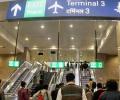
With better utilisation of slots, foreign flying rights, and greater international connections, the operator of India's largest airport feels a privatised Air India will bring commercial benefit to Delhi airport and help it revive quicker from the pandemic shock. Delhi is the largest hub for Air India, with most of its long-haul flights to the US and Europe being operated from here. The airport plans to give its most modern terminal 3 (T3) exclusively to the Tata Group.

Investors' wealth eroded by Rs 6 lakh crore in a single day on Wednesday as the BSE benchmark Sensex tumbled over 790 points. The 30-share BSE Sensex fell by 790.34 points or 1.08 per cent to settle at 72,304.88. During the day, it slumped 872.93 points or 1.19 per cent to 72,222.29.

Virtually addressing employees of Air India across the globe, he said for the airline to be the best again there will be an organisational redesign, and it will "require a huge transformation, probably the largest transformation and the change all of you would ever go through". The carrier will expand its "outreach both domestically and internationally" and it has the desire to connect India with every part of the globe, he added.

Benchmark equity indices ended marginally higher on Thursday, trimming most of their intra-day gains, as investors turned cautious ahead of the quarterly results of IT behemoths TCS and Infosys later in the day. Announcement of the US inflation data and domestic macroeconomic numbers also forced investors to remain on the sidelines. The 30-share BSE Sensex climbed 63.47 points or 0.09 per cent to settle at 71,721.18.

Operating margins have been the primary driver of corporate earnings in India in recent quarters, despite revenue growth suffering from weak consumer demand. Companies across sectors have reported a sharp improvement in earnings before interest, tax, depreciation, and amortisation (Ebitda) margins over the past two years, benefiting from lower commodity and energy prices. Higher margins more than compensated for slower revenue growth, resulting in double-digit growth in net profit for five consecutive quarters.
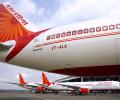
Tata Sons has emerged as the top bidder for the takeover of debt-laden State-run airline Air India but the bid is yet to be approved by a group of ministers headed by Home Minister Amit Shah, sources said.

As the Tata group inches closer to taking over Air India in January 2022, the $242-billion conglomerate will also inherit a stake in Kerala's Cochin airport. The Tatas would become the only airline to have an operational stake in a major Indian airport. The airport is a strategic hub connecting India to Middle East nations - home to the largest share of Indian migrant workers. In addition to Air India and Air India Express, private carrier Indigo also uses Cochin to ferry the lucrative 'Malayali Gulf traffic' to multiple locations like Jeddah, Riyadh, Sharjah, Dubai, Abu Dhabi, Doha, Kuwait and Bahrain, among others. According to regulatory filings, Air India has a three per cent stake in Cochin International Airport.
Reserve Bank of India on Thursday said 15 large NBFCs, including LIC Housing Finance, Bajaj Finance, Shriram Finance and Tata Sons, will be subject to enhanced regulatory requirements. The central bank has categorised NBFCs into Base Layer (NBFC-BL), Middle Layer (NBFC-ML), Upper Layer (NBFC-UL) and Top Layer (NBFC-TL). A list of 15 large Non Banking Finance Companies (NBFCs) falling in the Upper Layer category has been released.

"The strategic divestment transaction of Air India successfully concluded today with transfer of 100 per cent shares of Air India to M/s Talace Pvt Ltd along with management control," DIPAM secretary Tuhin Kanta Pandey said in a tweet. A new board, led by the strategic partner, takes charge of Air India, he added.
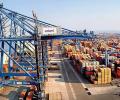
Gautam Adani-owned Adani Ports and Special Economic Zone (APSEZ) will replace IT major Wipro in the 30-share BSE Sensex from June 24, according to an official announcement on Friday. This marks the first inclusion of any Adani Group firm in Sensex. The group has 10 listed firms with a combined market valuation surpassing Rs 17 lakh crore.

Equity benchmark indices Sensex and Nifty closed marginally lower on Friday as investors booked profit in FMCG, IT and healthcare stocks after the BSE Sensex and Nifty hit fresh lifetime highs in intra-day deals. The 30-share BSE Sensex dipped 7.65 points or 0.01 per cent to settle at 75,410.39. During the day, it rallied 218.46 points or 0.28 per cent to hit its all-time intra-day high of 75,636.50.
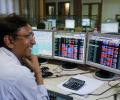
The market capitalisation of BSE-listed companies soared to an all-time high of Rs 406.52 lakh crore on Monday thanks to a rally in equities where the BSE Sensex climbed over 1 per cent. The 30-share BSE Sensex rallied 941.12 points or 1.28 per cent to finish at 74,671.28. During the day, it zoomed 990.99 points or 1.34 per cent to 74,721.15.

Air India Express on Thursday cancelled 85 flights or around 23 per cent of the total daily capacity as the disruptions due to the cabin crew shortage continue and said Air India will operate services on 20 of its routes to minimise inconvenience to passengers.

Among Sensex shares, Tech Mahindra fell by over 6 per cent after the company reported a 60 per cent decline in net profit to Rs 510.4 crore in the December quarter. Bharti Airtel, ITC, HCL Technologies, Asian Paints, Wipro, HDFC Bank, Nestle, Tata Steel, Tata Consultancy Services and Maruti were among the other major laggards. NTPC, ICICI Bank, IndusInd Bank, Reliance Industries, JSW Steel, Bajaj Finance, Bajaj Finserv and Mahindra & Mahindra were among the gainers.

Investors' wealth grew by Rs 3.24 lakh crore on Thursday as the BSE Sensex jumped nearly 1 per cent after a two-day slide. The 30-share BSE Sensex jumped 490.97 points or 0.69 per cent to settle at 71,847.57. During the day, it rallied 598.19 points or 0.83 per cent to 71,954.79.
The Tata group companies are now more valuable than all the listed central public sector undertakings (CPSUs) or companies in the country. The key 20 listed Tata companies ended the 2021 calendar year with a combined market capitalisation of Rs 23.36 trillion, ahead of the 70 listed CPSUs, which had a combined m-cap of Rs 23.2 trillion. In comparison, these CPSUs had a combined market capitalisation of Rs 16.7 trillion at the end of December 2020 against the Tata group firms' combined m-cap of Rs 15.7 trillion.

Historically, Tata Steel has always been among the biggest companies in the group in terms of m-cap, revenue, and profit but its fortunes began to decline after 2010 due to a sharp decline in the profitability of its European operations that it had acquired in 2007. The company was hit by a sharp rise in its debt level after this acquisition. First, it lost out to Tata Motors in terms of revenue in FY11 and then in March 2015, Titan beat it to become the third-biggest firm in the group in terms of m-cap. In FY20, TCS reported higher revenue and Tata Steel had become the third biggest company in that terms.
 © 2026 Rediff.com - Advertise with us - Disclaimer - Privacy Policy - Sitemap - Feedback - About us - Terms of use - Grievances